


When Roads Fail Riders: The Hidden Link Between Bad Design and Bicycle Crashes
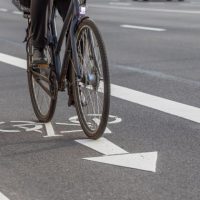
Most people assume bicycle accidents come down to two things: an inattentive driver or a careless cyclist. That assumption misses a third culprit that rarely makes the evening news, the physical road itself. Narrow shoulders, faded lane markings, poorly timed signals, and intersections built decades before anyone thought seriously about cyclists all play a quiet but measurable role in how often, and how badly, riders get hurt.
According to the National Highway Traffic Safety Administration, 1,166 cyclists were killed in traffic crashes in 2023, a four percent increase over the prior year, with an estimated 49,989 additional riders injured. Those numbers have been climbing for more than a decade, and infrastructure is a big part of the reason why.
Where Design Goes Wrong
A road engineered purely for car throughput, wide travel lanes, high speed limits, minimal buffering, sends an unspoken message that bicycles are an afterthought. A few recurring design failures show up again and again in crash investigations:
- Door-zone bike lanes placed directly beside parallel parking, putting cyclists in the path of an opening car door
- Intersections with poor sightlines, where landscaping, signage, or building placement blocks a driver’s view of an approaching rider
- Missing or worn pavement markings that leave both drivers and cyclists guessing about right-of-way
- Right-turn lanes that cross bike lanes without warning signage or a dedicated signal phase
- Uneven pavement transitions and storm drains aligned parallel to a rider’s direction of travel, which can catch a front tire and cause a sudden fall
Any one of these conditions can turn an ordinary commute into a serious injury. Combined, they create corridors where crashes are almost predictable.
The Legal Backdrop
Florida law treats a bicycle as a vehicle, meaning cyclists carry both the rights and the responsibilities of any other driver on the road. Florida Statute section 316.2065 spells out that a person operating a bicycle has “all of the rights and all of the duties applicable to the driver of any other vehicle,” with limited exceptions. That legal equality matters because it means a municipality or state agency cannot simply treat bike infrastructure as optional. When a governmental entity knows about a dangerous roadway condition and fails to correct it within a reasonable time, that failure can become part of a broader liability picture, alongside the driver whose negligence directly caused the crash.
Why This Matters After a Crash
Proving that a road defect contributed to a bicycle crash takes more than a photo of a pothole. It typically requires accident reconstruction, municipal maintenance records, prior complaint histories, and sometimes an engineering expert who can explain how a specific design choice increased the odds of a collision. This is precisely the kind of investigation our Fort Lauderdale personal injury lawyers regularly undertake when a client’s injuries trace back to something more than driver error.
If a road hazard, a confusing intersection, or a poorly maintained bike lane played a role in your crash, you deserve a full accounting of every party whose choices put you at risk. Boone & Davis will dig into the design and maintenance history behind the scene of your accident, not just the moment of impact, to build the strongest possible case on your behalf. Reach out today for a free, no-obligation consultation.
Source:
crashstats.nhtsa.dot.gov/Api/Public/ViewPublication/813739